Come riportare i giovani nel reparto ortofrutta e dare nuovo impulso ai consumi? Per La Grande Bellezza Italiana la risposta passa dalla capacità di trasformare le eccellenze del territorio in prodotti riconoscibili, distintivi e capaci di attrarre l’attenzione già nel punto di vendita, grazie a packaging innovativi, comunicazione e progetti condivisi con la gdo e la cucina italiana.
L’ingresso della Carota del Fucino Igp rappresenta molto più dell’ampliamento del catalogo. Segna infatti l’avvio di una collaborazione con uno dei più importanti distretti orticoli italiani, dove un tempo si estendeva il terzo lago della Penisola per superficie. Dopo l’esperienza del Cavolfiore della Piana del Sele Igp, una delle referenze de La Grande Bellezza Italiana, che aveva aperto la strada anche all’introduzione dell’etichetta nutrizionale, la rete compie un ulteriore passo avanti con la Carota del Fucino Igp, puntando su packaging, comunicazione e valorizzazione delle eccellenze territoriali.
“L’ortofrutta italiana -spiega Leonardo Odorizzi, responsabile commerciale de La Grande Bellezza Italiana- deve diventare sempre più protagonista della cucina italiana, oggi patrimonio immateriale dell’Unesco. È lì che si gioca la vera sfida della valorizzazione delle nostre produzioni Dop e Igp: portarle nei menu dei grandi chef, come è stato fatto per il cavolfiore con Davide Oldani, raccontarne il valore ai consumatori e affiancare a questo percorso il contributo dei nutrizionisti e un’innovazione sostenibile del packaging“.
Che cosa rappresenta questo nuovo ingresso?

Non è semplicemente una nuova referenza. L’ingresso della Carota del Fucino significa avviare una collaborazione con uno dei più importanti areali orticoli italiani, strategico soprattutto durante il periodo estivo. Il Fucino, grazie all’altitudine e alle caratteristiche uniche e di fertilità del terreno, ci permette di garantire continuità di fornitura quando molte produzioni di pianura terminano il loro ciclo.
Ma c’è anche un altro aspetto: vogliamo contribuire a valorizzare un territorio straordinario, conosciuto dagli operatori per la qualità delle sue produzioni, ma che merita di essere raccontato molto di più anche ai consumatori. La Carota del Fucino è solo il primo passo di questo percorso.
Biodiversità, origine certificata e filiera sono sempre più importanti nelle scelte d’acquisto: sono questi i pilastri della vostra strategia?
Assolutamente sì. La nostra missione è valorizzare produzioni con una forte identità territoriale e caratteristiche distintive. Il Fucino rappresenta un esempio straordinario di biodiversità e dimostra come il territorio possa diventare parte integrante del valore del prodotto. Le produzioni Igp raccontano proprio questo: disciplinari rigorosi, qualità e una storia che il consumatore vuole conoscere. Noi non vogliamo proporre semplici ortaggi, ma prodotti riconoscibili e capaci di distinguersi.
Per il lancio della Carota del Fucino avete scelto un packaging dai colori accesi. Perché questa scelta?
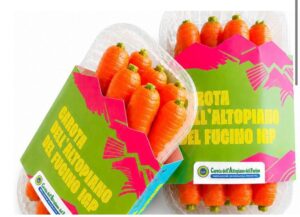
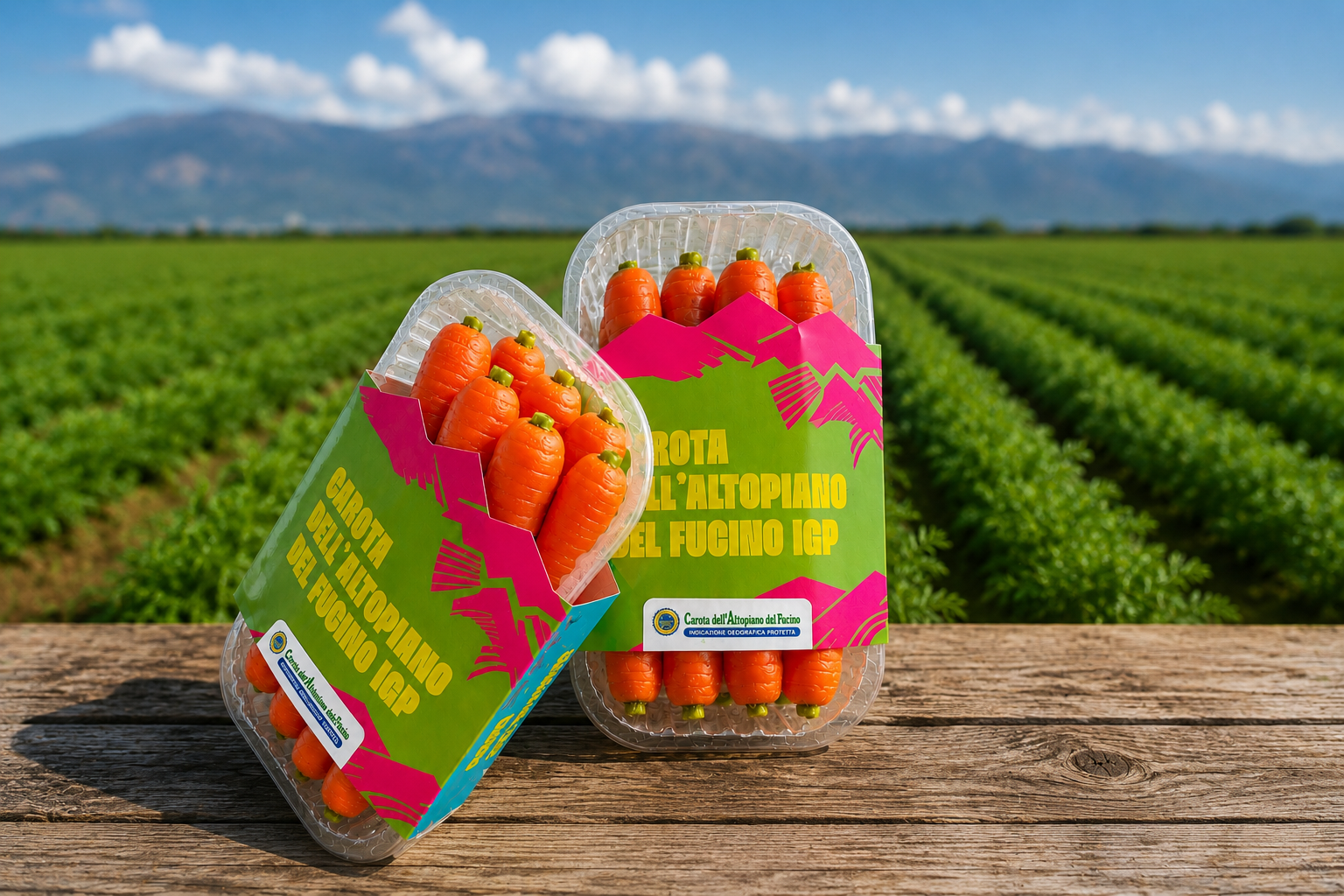
Oggi non basta avere un prodotto eccellente: bisogna anche catturare l’attenzione del consumatore. Il packaging deve creare stupore e rendere il prodotto immediatamente riconoscibile. Abbiamo scelto una gamma cromatica che combina azzurro, rosa marcato, verde e giallo, un mix molto “ruvido”, colori che danno energia al reparto ortofrutta e valorizzano il prodotto. Il vassoio è filmato con fascia in carta, una soluzione che unisce visibilità, comunicazione e attenzione all’evoluzione del packaging.
L’obiettivo è movimentare lo scaffale, incuriosire il consumatore e dialogare anche con le nuove generazioni. Ci troviamo di fronte a un cambio epocale e i giovani hanno modalità di acquisto completamente diverse rispetto al passato.
Come si svilupperà il progetto commerciale con la gdo?
Abbiamo avviato un progetto pilota con quattro insegne nazionali. La commercializzazione parte alla fine di luglio e proseguirà fino a novembre, così da accompagnare tutta la campagna della Carota del Fucino e misurare la risposta del mercato. È un test importante, perché ci consentirà di capire come il consumatore percepisce un packaging così innovativo e quanto questo possa contribuire a valorizzare il prodotto nel punto di vendita.
Anche la gdo guarda con interesse a progetti di questo tipo, perché ha bisogno di referenze capaci di differenziare il reparto e stimolare i consumi.
State lavorando anche a nuovi modelli di valorizzazione delle produzioni Igp nel punto di vendita? Avete già riscontri concreti?
Assolutamente sì. Il nostro obiettivo è recuperare il ritardo accumulato nella valorizzazione dell’ortofrutta certificata. Alcune eccellenze agroalimentari italiane sono diventate icone riconosciute in tutto il mondo, mentre molte produzioni Dop e Igp dell’ortofrutta hanno ancora ampi margini di crescita. Per questo investiamo su packaging, comunicazione e posizionamento nel punto di vendita.
L’italianità va esplosa attraverso le marche, i risultati stanno arrivando. La Pesca di Verona Igp, per esempio, in poco più di un anno è entrata in sei insegne della gdo, dimostrando che quando il prodotto viene raccontato e valorizzato il mercato risponde positivamente.
—–
We Must Create Surprise at the Store
Leonardo Odorizzi, sales manager of ‘La Grande Bellezza Italiana’, explained how the entry of the Fucino Carrot, the eighth PGI reference from their business network, is strengthening a strategy based on promoting the most suitable areas, using ‘rough’ colors in packaging, and projects with large-scale retailers and chefs to differentiate the produce department and attract new consumers
How can we bring young people back to the produce department and boost consumption? For ‘La Grande Bellezza Italiana’, the answer lies in the ability to transform local excellence into recognizable, distinctive products capable of attracting attention right at the store, thanks to innovative packaging, communication, and projects shared with large-scale retailers and Italian cuisine. This is the strategy adopted by ‘La Grande Bellezza Italiana’, a business network born from the union of six founding members and grown over the years by bringing together many production partners in new supply chains. This model has allowed the company to increase turnover from approximately 90 million euros in 2008 to 145 million euros in 2025. It now covers approximately 1,500 hectares of crops, generates over 30% of its turnover on foreign markets, and includes eight PGI references – Verona Radicchio, Verona Peach, Cuneo Red Apple, Cauliflower from Piana del Sele, Mantua Pear, Taranto Clementine, Puglia Grape, and, since June, Fucino Carrot – alongside many other premium products.
The entry of PGI Fucino Carrot represents much more than an expansion of the catalog. Indeed, it marks the start of a collaboration with one of Italy’s most important horticultural districts, where once there was the third-largest lake in Italy. Land reclamation completed in the second half of the 19th century transformed the ancient lake basin into one of the most fertile plains in the Country. Even today, the unique characteristics of this soil and the expertise of the agricultural enterprises make the Fucino region a point of reference for high-quality horticultural production. Following the experience of PGI Cauliflower from Piana del Sele, one of the references proposed by ‘La Grande Bellezza Italiana’, which also paved the way for the introduction of nutritional information labels, the network is taking another step forward with PGI Fucino Carrot, focusing on packaging, communication, and promotion of local excellence. Leonardo Odorizzi, sales manager for ‘La Grande Bellezza Italiana’, explained: ‘Italian fruit and vegetables must increasingly become a key component of Italian cuisine, now a UNESCO intangible cultural heritage. This is where the real challenge of promoting our PDO and PGI products lies: bringing them to the menus proposed by top chefs, as was done for cauliflower by Davide Oldani, explaining their value to consumers, and supporting this process with the contribution of nutritionists and sustainable packaging innovation’.
What does the addition of this new reference represent?
It is not simply a new reference. The addition of the Fucino Carrot means starting a collaboration with one of Italy’s most important horticultural areas, a strategic one especially during the summer. Thanks to its altitude and the unique characteristics and fertility of its soil, Fucino allows us to guarantee continuity of supply when many productions in the plain finish their cycle. But there is also another aspect: we want to help promote an extraordinary region, renowned among professionals for the quality of its produce, which deserves to be shared even more with consumers. The Fucino Carrot is just the first step on this journey.
Biodiversity, certified origin, and supply chain are increasingly important in purchasing decisions: are these the cornerstones of your strategy?
Absolutely yes. Our mission is to promote products with a strong territorial identity and distinctive characteristics. The Fucino area is an extraordinary example of biodiversity and demonstrates how the local area can become an integral part of a product’s value. PGI products communicate precisely this: rigorous specifications, quality, and a story consumers want to know. We do not want to offer simple vegetables, but recognizable products capable of standing out.
For the launch of the Fucino Carrot, you chose brightly colored packaging. Why did you make this choice?
Today, having an excellent product is not enough: we also need to capture consumers’ attention. Packaging must create surprise and make the product immediately recognizable. We chose a palette of light blue, bold pink, green, and yellow – a very ‘rough’ mix – colors that energize the produce department and enhance the product. The tray is wrapped with a paper band, a solution that combines visibility, communication, and attention to the evolution of packaging. The goal is to liven up the shelf, intrigue consumers, and dialogue with the new generations as well. We are facing an epochal change, and young people have completely different purchasing habits than in the past.
Is the European PPWR regulation a critical issue or an opportunity?
It is an epochal change. We were among the first to experiment with paper packaging and new packaging solutions, so we have been preparing for some time. Sustainability also represents a great opportunity from a communications perspective, but the real challenge will be understanding how consumers will react. Changing materials means changing purchasing habits, and this takes time. That’s why we continue to test new solutions with retailers to support the market in this evolution.
How will the commercial project with large-scale retail trade develop?
We have launched a pilot project with four national retailers. Marketing began at the end of July and will continue until November, to accompany the entire campaign for the Fucino Carrot and evaluate market response. This is an important test, because it will allow us to understand how consumers perceive such innovative packaging and how much it can contribute to enhancing the product at the store. Large-scale retail trade is also looking with interest at projects like this, as it needs products that can differentiate this department and stimulate consumption.
Are you also working on new models for promoting PGI products at the store? Do you already have concrete results?
Absolutely yes. Our goal is to make up for the accumulated delay in promoting certified fruit and vegetables. Some excellent Italian agri-food products have become icons recognized worldwide, while many PDO and PGI fruit and vegetable products still have ample room for growth. That’s why we invest in packaging, communication, and positioning at the store. Italian quality must be promoted through brands, and the results are coming. PGI Verona Peach, for example, has been included in six large-scale retail chains in just over a year, demonstrating that when a product is presented and enhanced, the market responds positively.
PGI Cauliflower from Piana del Sele has also paved the way for healthy eating through its nutritional label. Will the Fucino Carrot follow the same path?
Nutritional information represents added value. We must increasingly involve the world of nutrition, because nutritionists are also the ones who can explain to consumers the health benefits of our produce and the role of fruit and vegetables in a balanced diet. This is where Italian cuisine comes into play: we want our PDO and PGI products to become key ingredients on the menus prepared by great chefs. If we can bring together local products, health, cuisine, and sustainability, we will give our products much greater growth potential.