Cosenza PDO (protected designation of origin) figs grow on the very best Ficus Carica Sativa plants whose figs are sun-dried, giving them the unmistakeable, almost honey-like sweet flavour. The variety is particularly well-suited for drying but above all it is resistant to Blastophaga, the insect that fertilises the figs. Precisely the non-fertilisation allows the Cosenza figs to maintain the typical flavour that allows them to stand out from the rest. In the 1970s, as the countryside was abandoned, fig-drying was reduced to family consumption only. With a view to reversing the trend and taking the segment back to its prior glory, in March 2003, first the Consorzio Fico Essiccato del Cosentino (dried fig consortium of Cosenza) was established, followed, with official recognition in 2020, by the Consorzio di tutela dei Fichi di Cosenza Dop (consortium to protect Cosenza PDO figs).
“The Cosenza dried fig chain exists thanks to the commitment of that group of producers and packagers that almost 20 years ago gathered together to form the Consortium” – Anna Garofalo, Chairman of the protection consortium, says -. “We have developed the entire chain both modernising the companies and increasing the cultivated surface areas. We knew that in order to optimise the specificity of our figs, it would take an extra step, the PDO mark for Cosenza figs. Thus we defined strict production rules and began the procedure to obtain the protected designation of origin. Which came in 2011”.
Clearly, not all figs are Cosenza PDO. The protected designation of origin Cosenza figs marking is exclusive to dried products with an elongated droplet form and a slim, short stalk. The skin colour varies from straw yellow to light beige, while the pulp has few seeds that are small and not overly crispy. Piece size varies from small (more than 85 pieces of fruit to the kilo) to medium (66 to 85) and large (55 to 65 pieces of fruit to the kilo). Dried, the figs are full, fleshy, soft, plastic, highly sugary and easy to store.
“The recognition leads the consortium to be more incisive and the chain continues to lengthen” – Anna recalls – “but we felt the need to also flank this with controls and chain guarantees. Thus in 2020, our little group, which had now grown, obtained official recognition as the Consorzio di tutela dei Fichi di Cosenza Dop”.
The aim is clear: to promote the product through participating in trade fairs and events in Italy and abroad: this year was the turn of the Parma Cibus in May and the Paris Sial this coming October, but other projects are also in the pipeline. “We are studying new growing techniques” – the Chairman explains – “because climate change forces us to innovate. In 2021, for example, we lost 70% of production through drought and today we are studying new pruning methods that are more similar to olives and encouraging the use of natural fertilisers”.
The marketing of Cosenza PDO figs takes place from January to May and October to December with a peak around Christmas, but for some years now, consumption has been rising in the summer too, in tourist areas.
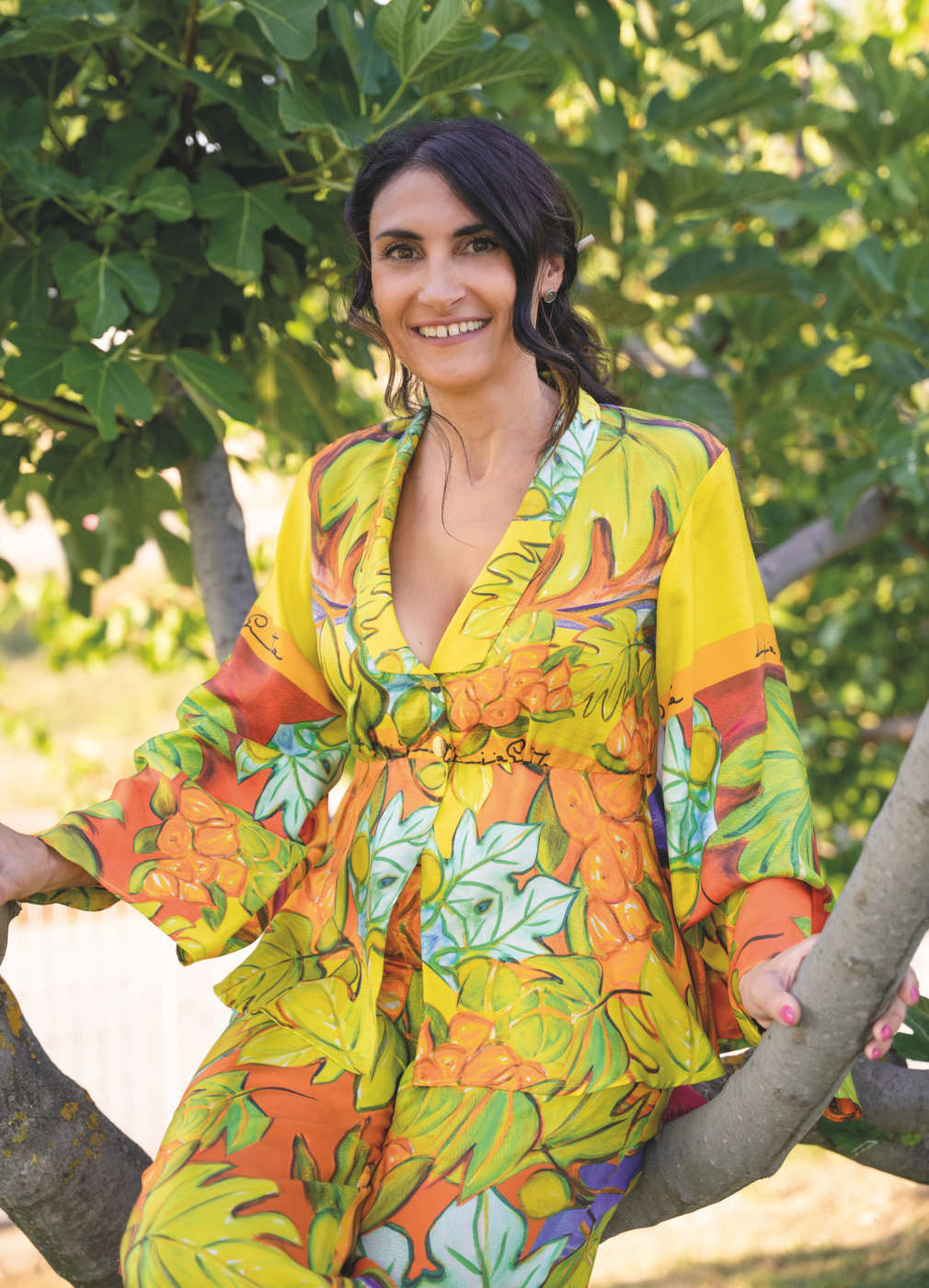
“70% of production goes abroad, mainly to the English market, followed by Canada, the USA and the Czech Republic. The figs can be packaged into wooden trays weighing between 50 grams and 1 kilogram, or in cardboard containers weighing up to 25 kilograms. All bear the Cosenza PDO figs logo. The protection consortium emphasises the importance of the fig as a jewel of our land. And this interpretation has also been developed creating first a clothing collection and then a jewellery line, again collaborating with our local creative minds”, Anna Garofalo concludes.