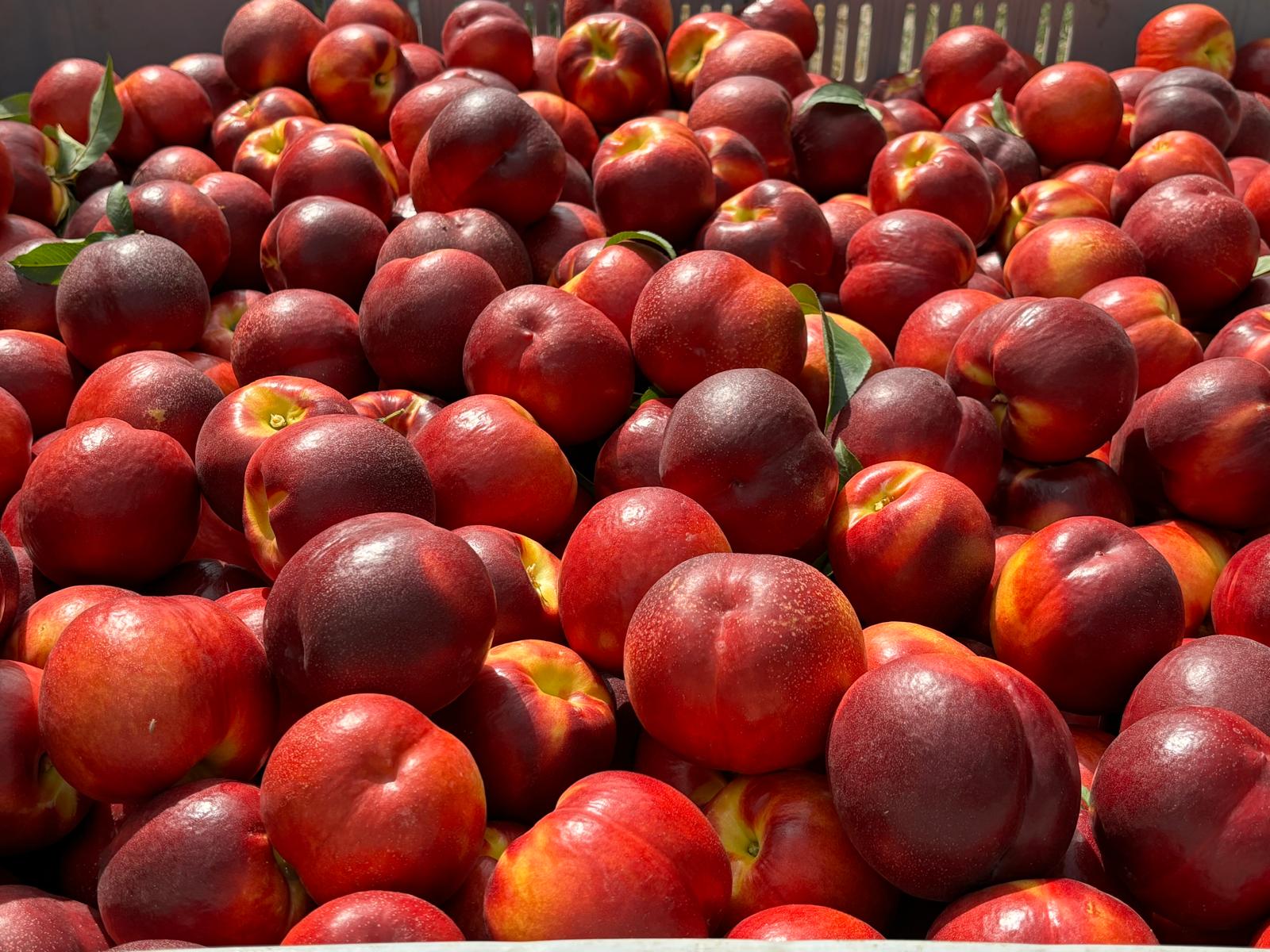
Si stima a circa 867mila tonnellate (+3% sul 2025) la produzione italiana di pesche e nettarine in Italia per la stagione 2026, con un’accelerazione della campagna dovuta al caldo intenso che ha caratterizzato il clima, specie nella Pianura Padana, a partire da metà giugno. Un risultato importante, soprattutto se si considera che nell’ultimo anno è stato perso un ulteriore 1% di superfici coltivate, che restano sostanzialmente stabili a quota 40800 ettari. Calano gli spazi dedicati alle pesche (-3%) e alle percoche (-5%) mentre tengono le posizioni le nettarine. Un recupero, confrontato con la passata stagione, diffuso dal Nord al Sud della penisola, cosa che garantisce un calendario di raccolta continuo e coerente. Ma in che direzione vanno le pesche e le nettarine in Italia? Infatti, mentre sui banchi di Gdo e mercati ci sono diverse varietà di frutta, a polpa gialla e a polpa bianca, lisce o ruvide, tonde o piatte, nei vivai si studia già il futuro di questa importante categoria che per l’ortofrutta italiano rappresenta uno degli asset più rinomati.
Geoplant scommette sulle nettarine a polpa gialla
Nel ravennate Geoplant Vivai detiene centinaia di licenze e attualmente è coinvolta in diversi programmi di breeding rivolti all’ottenimento sia di nuove varietà che nuovi portinnesti. Ma la tendenza del comparto sembra andare con decisione in direzione delle varietà a polpa gialla: “Circa l’80% del totale -spiega il responsabile tecnico-commerciale Gianluca Pasi- è rappresentato da nettarine a polpa gialla perché al momento è questo che ci chiede il mercato. In prospettiva sono in crescita le pesche piatte, sulle quali scontiamo però un ritardo di 25 anni durante i quali la produzione spagnola ha saturato il settore, mentre negli ultimi due anni abbiamo assistito a un lieve recupero della pesca a polpa gialla. Come vivaio collaboriamo con aziende situate nelle zone più vocate d’Italia, come Piemonte, Emilia-Romagna, Puglia e Campania, lavorando su centinaia di varietà. Una menzione particolare va al progetto MAS.PES, un programma di miglioramento varietale del pesco e dell’albicocco mirato all’ottenimento di cultivar valorizzando i caratteri di adattamento ambientale, qualità dei frutti e resistenza ad alcune malattie”. Circa l’85-90% del lavoro di Geoplant è indirizzato sul mercato interno, una scelta un po’ in controtendenza dato che la maggior parte degli operatori vivaistici fanno almeno il 50% di export.
Vivai Calderoni promuove l’innovazione varietale
Il trend che guarda alle varietà a polpa gialla è confermato anche da Francesco Calderoni, titolare dei Vivai Calderoni. Basati a Solarolo (Ravenna), i Vivai Calderoni mettono in circolazione circa 200mila piante innestate all’anno. Collaborano con alcune delle aziende più importanti come Star Fruit per la produzione di pesche, susine, albicocche, pere e mele, con aziende sudafricane e francesi e sono dietro a progetti di brand come le susine Metis e a varietà club di mele come Pink Lady e Joya. “La tendenza -afferma Calderoni- oggi è senza dubbio rivolta a nettarine a polpa gialla, subacide, che garantiscano una disponibilità da metà giugno a metà settembre. Parimenti negli ultimi anni abbiamo assistito a un ritorno delle pesche a polpa gialla, specie di varietà Corindon e Pajalade, mentre l’interesse per le piatte è buono al Sud ma ancora limitato al Centro-Nord. Complessivamente lavoriamo su circa 60 varietà di pesche e nettarine, tra le quali segnaliamo una decina di nuove varietà a polpa rossa, una bella novità in un settore nel quale non è facile portare qualcosa di nuovo. Non è detto che queste pesche a polpa rossa eroderanno le quote di mercato di quelle a polpa gialla e bianca, più probabile che, date le loro caratteristiche peculiari di gusto, vadano a crearsi una propria nicchia di mercato separata e indipendente”. Ma Vivai Calderoni è attiva anche nel campo del miglioramento genetico per favorire il contrasto a tutti quei problemi che attanagliano la frutticoltura: “Nei prossimi anni -conclude Calderoni- vedremo i risultati di un programma di miglioramento a cui prendiamo parte e avente per capofila la francese Ac Fruit. L’obiettivo di questo programma è lavorare sulla maggiore resistenza a malattie e parassiti e oggi siamo vicini ad avere le basi genetiche per fare cose che dieci anni fa erano considerate pura fantascienza”.
What does the future hold for Italian peaches and nectarines?
Sector trends seen through the lens of nursery gardening
Italian peach and nectarine production is estimated at approximately 867,000 tons (+3% compared to 2025) for the 2026 season, with an acceleration of the campaign due to the intense heat that has characterized the climate, especially in the Po Valley, starting in mid-June. This is a significant result, especially considering that a further 1% of cultivated areas have been lost over the past year; therefore, this quantity remains essentially stable at 40,800 hectares. Areas dedicated to peaches (-3%) and clingstone yellow peaches (-5%) are decreasing, while nectarines are holding their ground. This recovery, compared to the previous season, is widespread from Northern to Southern Italy, ensuring a continuous and consistent harvest schedule. But where are peaches and nectarines headed in Italy? Indeed, while large-scale retail and market offer a variety of fruit – yellow-fleshed and white-fleshed, smooth or rough, round or flat – nurseries are already studying the future of this important category, one of the most renowned assets for the Italian fruit and vegetable sector.
Geoplant Vivai are betting on yellow-fleshed nectarines
In the Ravenna area, Geoplant Vivai hold hundreds of licenses and are currently involved in several breeding programs aimed at developing both new varieties and new rootstocks. But the industry trend seems to be moving decisively toward yellow-fleshed varieties. Gianluca Pasi, Technical Sales Manager, explained: ‘About 80% of the total is represented by yellow-fleshed nectarines, because this is what the market is currently demanding. Looking ahead, flat peaches are on the rise, but we are experiencing a 25-year delay in their growth, as Spanish production saturated the sector. Over the past two years, however, we have seen a slight recovery in yellow-fleshed peaches. As a nursery, we collaborate with companies located in Italy’s most suitable areas, such as Piedmont, Emilia-Romagna, Puglia, and Campania, working on hundreds of varieties. Special mention goes to the MAS.PES project, a peach and apricot varietal improvement program aimed at developing cultivars that enhance their environmental adaptation, fruit quality, and resistance to certain diseases’. Approximately 85-90% of Geoplant’s work is directed towards the domestic market, a somewhat counter-trend choice, given that most nursery operators generate at least 50% of their revenue from exports.
‘Vivai Calderoni’ Plant Nurseries are promoting varietal innovation
The trend toward yellow-fleshed varieties is also confirmed by Francesco Calderoni, owner of ‘Vivai Calderoni’ Plant Nurseries. Based in Solarolo (Ravenna), Calderoni plant nurseries release approximately 200,000 grafted plants each year. They collaborate with some of the most important companies, such as Star Fruit for the production of peaches, plums, apricots, pears, and apples, as well as with South African and French companies, and are behind such branded projects as Metis plums and such club apple varieties as Pink Lady and Joya. Calderoni explained: ‘The trend is undoubtedly toward yellow-fleshed, sub-acid nectarines, whose availability is guaranteed from mid-June to mid-September. Similarly, in recent years we have seen a reappearance of yellow-fleshed peaches, especially Corindon and Pajalade varieties, while interest in flat peaches is strong in Southern Italy, but still limited in Central and Northern Italy. Overall, we are working with around 60 varieties of peaches and nectarines, including a dozen of new red-fleshed varieties, an appreciated new product in a sector where it is not easy to bring something new. It is not a given that these red-fleshed peaches will erode the market share of yellow- and white-fleshed peaches; more likely, given their unique flavor characteristics, they will create their own separate and independent market niche’. But Vivai Calderoni is also active in the field of genetic improvement to help combat all the problems plaguing fruit growing. Calderoni concluded: ‘In the coming years, we will see the results of a breeding program in which we are participating and led by the French company ‘AC Fruit’. The goal of this program is to work on better resistance to diseases and pests, and today we are close to having the genetic basis to do things that ten years ago were considered pure science fiction’.