Sostenibili grazie all’effetto antispreco, convenienti per i formati sempre più pratici, disponibili tutto l’anno con un effetto anti-inflattivo e sempre più apprezzati (per zuppe e minestroni battono il fresco), oggi i vegetali surgelati rispondono pienamente alla domanda di prodotti clean e healthy.
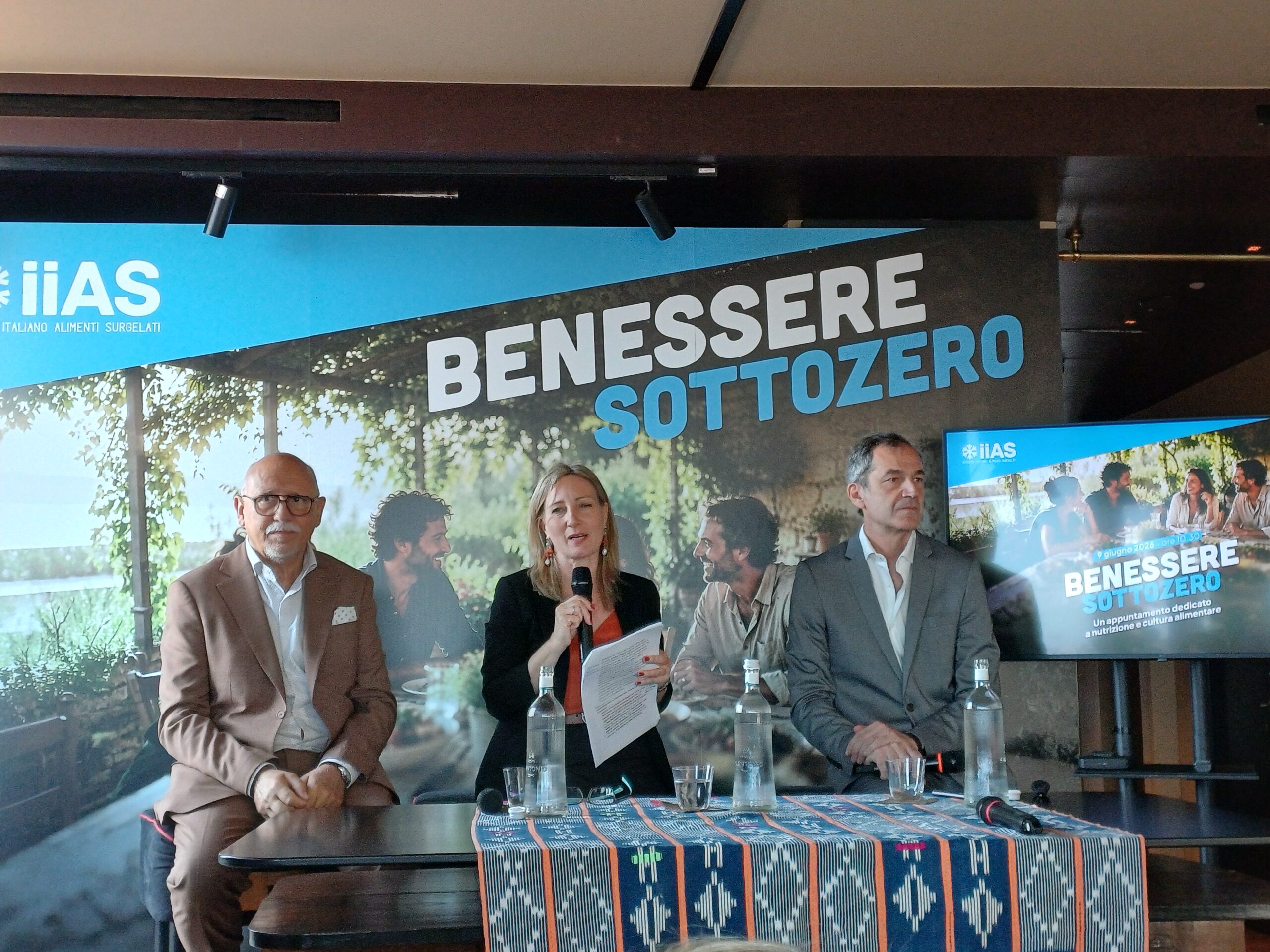
La conferma arriva da una ricerca, in via di pubblicazione, presentata a Milano da Iias (Istituto italiano alimenti surgelati) e realizzata da Ssica (Stazione sperimentale per l’industria delle conserve alimentari). I risultati preliminari indicano che la surgelazione industriale, grazie alla rapidità del processo, contribuisce a preservare il patrimonio nutrizionale dei vegetali, senza comprometterne in modo significativo la qualità.
Focus su piselli, fagiolini, broccoli e spinaci
Lo studio di Ssica ha messo a confronto ortaggi freschi e surgelati nelle condizioni più vicine al consumo reale, cioè dopo la conservazione e la cottura. L’analisi ha riguardato piselli, fagiolini, broccoli e spinaci, valutando l’andamento nel tempo di vitamine e composti bioattivi.
Tra i risultati più significativi emerge la stabilità dei polifenoli nei piselli fino a 18 mesi e il mantenimento di diverse vitamine del gruppo B. “Abbiamo visto che la surgelazione permette anche di mantenere i glucosinolati presenti nei broccoli, sostanze molto studiate dalla letteratura scientifica per il loro potenziale ruolo protettivo nei confronti di alcune forme tumorali”, ha sottolineato Luca Sandei, responsabile della divisione pomodoro e filiere vegetali di Ssica.
Nel caso dei vegetali surgelati, la materia prima viene lavorata entro poche ore dalla raccolta. Il processo comprende anche il blanching (una lieve scottatura), che inizialmente comporta una certa perdita di vitamine termolabili, come la vitamina C, ma consente di inattivare molti enzimi responsabili del deterioramento del prodotto. “La perdita è legata soprattutto alle prime fasi preliminari di lavorazione, mentre durante la conservazione surgelata il decadimento si arresta e procede successivamente in maniera molto più lenta”.
Percezioni e realtà a confronto
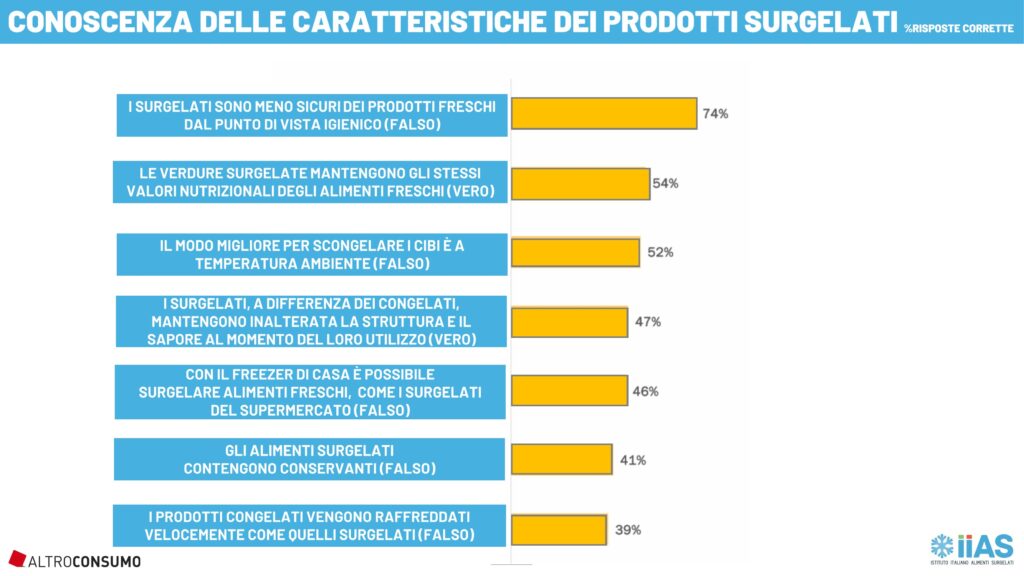
La ricerca smentisce inoltre alcune convinzioni errate ancora diffuse tra i consumatori, evidenziate da un’indagine realizzata da Altroconsumo su oltre mille italiani per Iias.
Lo studio conferma che i surgelati sono percepiti soprattutto come prodotti sicuri: il 74% degli intervistati ne riconosce infatti l’affidabilità dal punto di vista igienico. Tuttavia, quasi la metà della popolazione (46%) continua a ritenerli inferiori sotto il profilo nutrizionale.
Ancora più marcata è la confusione sul tema dei conservanti: soltanto il 41% degli intervistati sa che i surgelati non ne contengono, mentre la maggioranza continua ad associare erroneamente la loro conservazione alla presenza di additivi.
Anche le corrette modalità di scongelamento non sono ancora del tutto conosciute. Quasi un italiano su due ritiene infatti che lasciare gli alimenti a temperatura ambiente sia il metodo migliore per scongelarli, nonostante si tratti di una pratica sconsigliata per il rischio di proliferazione batterica.
Frozen Foods, Nutritional Benefits from Local Products
A study carried out by SSICA presented by IIAS showed how industrial freezing helps preserve both vitamins and bioactive compounds of vegetables over time
Frozen foods will increasingly play a leading role among the foods of the future, thanks to increasingly advanced industrial technologies that allow preserving the nutrients of fruit and vegetables as if they were short-chain or local products. This is confirmed by research, currently being published, presented in Milan by IIAS (Istituto italiano alimenti surgelati – Italian Institute of Frozen Foods) and carried out by SSICA (Stazione sperimentale per l’industria delle conserve alimentari – Experimental Station for the Canned Food Industry). Preliminary results indicate that industrial freezing, thanks to the rapidity of this process, helps preserve the nutritional value of vegetables over time, without significantly compromising their quality. The study carried out by SSICA began in 2024 and will conclude in 2027. At present, the available data covers up to 18 months of observation for certain parameters of the frozen product. The study, which examined the performance of Intensive Quick Freezing (IQF), compared fresh and frozen vegetables in conditions closest to their actual consumption, that is, after preservation and cooking. Specifically, it focused on peas, green beans, broccoli, and spinach, evaluating the evolution of vitamins and bioactive compounds over time. Among the most significant findings, the stability of polyphenols in peas for up to 18 months and the preservation of several B vitamins stand out. Luca Sandei, head of SSICA tomato and vegetable supply chain division, emphasized: ‘We saw that freezing also allows us to preserve the glucosinolates present in broccoli; these substances have been extensively studied in the scientific literature for their potential protective role against certain types of cancer’. In the case of frozen vegetables, the raw material is processed within a few hours from the harvest. The process also includes blanching (a light scalding), which initially causes some loss of thermolabile vitamins, such as vitamin C, but inactivates many enzymes responsible for product deterioration. ‘The loss is mainly linked to the initial preliminary processing stages, while during frozen storage, decay stops and subsequently proceeds much more slowly’.
The survey carried out by Altroconsumo and the persistent false myths
Frozen vegetables, which are sustainable thanks to their anti-waste effect, affordable thanks to increasingly practical formats, available year-round with an anti-inflation effect, and increasingly popular (they beat fresh ones for soups and minestrone), today fully meet the demand for natural and healthy products. Research also debunks some still widespread misconceptions among consumers, highlighted by a survey conducted by Altroconsumo involving over a thousand Italians for Iias. This survey confirmed that frozen foods are perceived primarily as safe products: 74% of respondents acknowledged their reliability in terms of hygiene. However, almost half of the population (46%) continues to consider them inferior from a nutritional standpoint. Confusion over the topic of preservatives is even more pronounced: only 41% of respondents knew that frozen foods do not contain them, while the majority continued to mistakenly associate their preservation with the presence of additives. Even the correct defrosting methods are still not fully understood. Nearly one in two Italians believes that leaving food at room temperature is the best method for defrosting, even though this practice is discouraged due to the risk of bacterial growth. Taste remains one of the main obstacles to purchasing frozen foods, according to the survey carried out by Altroconsumo. Yet a recent blind test commissioned by the Italian Institute of Frozen Foods revealed a different story. As mentioned by Giorgio Donegani, president of IIAS, consumers tasted identical recipes prepared with fresh and frozen ingredients without knowing which version they were tasting. In all five comparisons, preparations made with frozen ingredients received the highest ratings.